
How to Check Criminal History in New Mexico
Choose the record by the question it can answer. New Mexico DPS supplies a subject-authorized, fingerprint-supported state arrest record. New Mexico Case Lookup shows public court metadata. A county detention center can confirm a recent local booking, while NMCD Offender Search covers state prison and state probation or parole. The originating law-enforcement agency remains the source for its own incident report. Each channel has a different custodian, scope, and update cycle.
A careful New Mexico criminal record search starts with known facts: legal name, possible aliases, date of birth, event date, county, court, arresting agency, and any report, booking, or case number. A common name alone is weak proof. Match the court, dates, charges, and final outcome before treating a result as connected to the right person.
- Use the $15 New Mexico DPS process to review your own fingerprint-linked state record.
- Search New Mexico Case Lookup for public filed cases, then read each count and event.
- Open the county directory for a booking, report, local warrant check, or original court file.
- Use NMCD only for state prison or state supervision, not a recent county arrest.
- Get a certified disposition when an exact result or repository correction is needed.
Note: A negative result from one New Mexico system does not prove that no arrest, case, warrant, or protected record exists.
Why New Mexico DPS Has No Public Name Search
New Mexico does not offer an unrestricted public portal for searching the State Central Repository by anyone's name. Section 29-10-6 provides a route for a person to inspect their own arrest-record information, either directly, through counsel, or through an authorized agent. New Mexico DPS implements that access with an original notarized authorization and a $15 cashier's check or money order. The returned record covers fingerprint-supported adult New Mexico arrests held by LERB and the outcomes it received.
This limit is easy to misunderstand. Free court metadata is not a state rap sheet, and a same-name docket result is not biometric identification. For someone else's public record, use the filed court case, releasable county booking data, and the report held by the government body that created it. For your own record, the DPS process is the sound statewide starting point.
The New Mexico Criminal History Repository
The New Mexico Department of Public Safety houses the State Central Repository for Criminal History in its Law Enforcement Records Bureau. LERB maintains fingerprint-supported felony, DWI, and qualifying misdemeanor arrest cycles. Booking agencies submit biometric records and state tracking numbers. Courts and prosecutors later report dispositions so the arrest cycle can show what happened in the case. DPS also forwards qualifying biometric and disposition data to federal criminal-justice systems.
The repository is identity-centered. It does not replace the case-centered file at a New Mexico court, the narrative held by an arresting agency, or the intake record at a county jail. Its broader work includes AFIS, UCR reporting, the Sex Offender Registry Unit, the Expungement Unit, NCIC support, and a Criminal History Clearinghouse for participating courts. The full agency process is covered in the New Mexico DPS criminal history profile.
New Mexico's Disposition Reporting Gap
Repository accuracy depends on every contributor. A December 2025 Legislative Finance Committee analysis found final dispositions attached to only 7 percent of New Mexico arrests made in the prior five years. A blank outcome does not mean the matter is pending. It may conceal a dismissal, acquittal, declination, diversion, or conviction that did not link back to the fingerprint cycle.
When a DPS rap sheet and a court docket disagree, compare the state tracking number, arrest date, agency, charge, court, and case number. Obtain the certified judgment, dismissal, acquittal, or declination from the clerk. Section 29-3-12 assigns factual correction to the source that supplied the information and requires notice to DPS. After a source correction, request a fresh DPS record and check the public court system again.
Key New Mexico access rules:
IPRA, Sections 14-2-1 through 14-2-12 opens public records subject to specific exceptions and redactions.
Section 29-10-6 gives a person a verified route to inspect their own state arrest information.
Section 29-3-8 sets the fingerprint, tracking, and disposition-reporting chain.
Rule 1-079 NMRA governs public access, sealing, and protected identifiers in court records.
Sections 29-3A-1 through 29-3A-7 establish the criminal record expungement process.
Statewide Record Systems in New Mexico
Four statewide systems cover distinct parts of New Mexico criminal history. Case Lookup is a free index of public court events, but it does not display documents. NMCD Offender Search covers state prison and state supervision, not county detention. The DPS registry publishes only the subset allowed by the Sex Offender Registration and Notification Act. The LERB repository is accessed through subject authorization rather than a public name search.
| System | What It Holds | Run By |
|---|---|---|
| DPS authorized record | Fingerprint-linked state arrest cycles and received outcomes | New Mexico DPS LERB |
| New Mexico Case Lookup | Public court case metadata, not documents | New Mexico Judiciary |
| NMCD Offender Search | State prisoners and state probation or parole | New Mexico Corrections Department |
| New Mexico DPS Sex Offender Registry | Legally publishable registration profiles | New Mexico DPS with county sheriffs |
The official New Mexico Case Lookup entry point provides the statewide court-index source shown below.
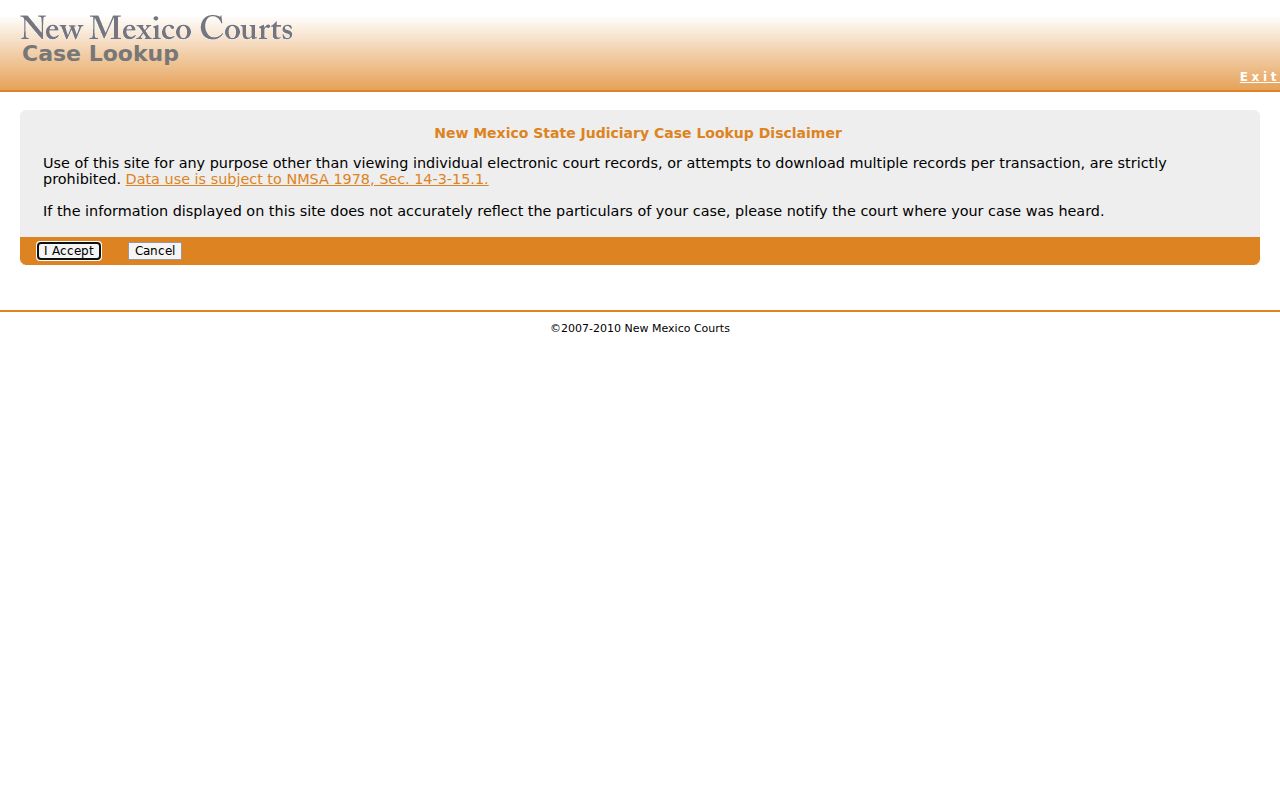
The captured interface illustrates why court metadata is one layer of a New Mexico record, not the complete criminal history.
New Mexico Jail, Prison, and Federal Custody
Custody searches divide into three levels. A county or city detention center holds most recent arrestees and many people awaiting trial. NMCD holds people committed to state prison and also reports state probation or parole indicators. The Federal Bureau of Prisons is a third system for federal custody. A person arrested locally does not appear in NMCD merely because fingerprints or a court case exist.
NMCD says prison data update nightly and may take a day to appear, while probation and parole data update in real time. Current movement or legal status still needs confirmation with the institution or field office. The search can use a name or offender number and includes active, inactive, and absconder options.
The official NMCD Offender Search supplies the state custody and supervision interface pictured here.
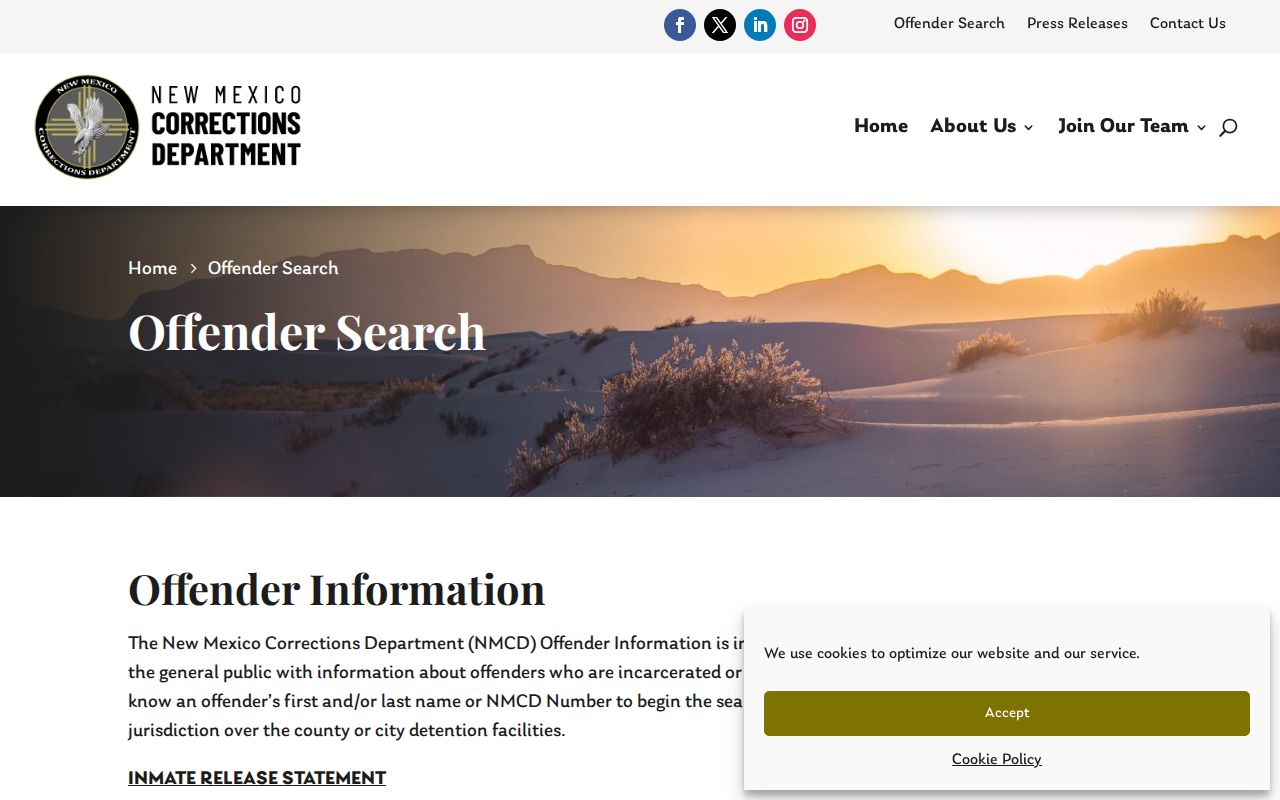
This New Mexico form should not be used as a substitute for any county jail's live roster or booking desk.
Note: New Mexico VINE may provide release or escape notices, but its current upgrade notice makes direct NMCD and county verification important.
Types of Criminal Records
New Mexico criminal records are created at different points in the justice process. The arresting agency writes its report. Detention staff create the booking record. A prosecutor and court create charging instruments, docket events, judgments, and sentence records. LERB compiles fingerprint-linked arrest cycles and received outcomes. NMCD adds state custody and supervision data only after a qualifying sentence or supervision order.
- Arrest and booking records: Preliminary agency and custody facts that do not prove guilt.
- Criminal court case files: Filed charges, events, dispositions, judgments, and sentences kept by judiciary clerks.
- Repository rap sheets: Identity-centered arrest cycles tied to fingerprints and reported outcomes.
- Warrants: Court and law-enforcement process that requires direct status confirmation.
- Custody and supervision: County detention, NMCD prison or supervision, and separate federal custody.
- Disposition
- The count-level outcome, such as dismissal, acquittal, plea, or conviction.
- STN
- The state tracking number assigned to a reportable New Mexico arrest incident.
- Rap sheet
- The fingerprint-linked repository history, not the full court or police file.
- Expungement
- Removal of covered records from general-public access under New Mexico law.
New Mexico Has No Statewide Warrant Search
No reliable public statewide all-warrants name index was found for New Mexico. Case Lookup may show that a warrant was issued, served, returned, cancelled, or quashed, but it is not guaranteed to be current and has limited municipal coverage. Restricted law-enforcement tools such as NCIC and the DPS Criminal History Clearinghouse are not public warrant portals.
Search the exact case and inspect its event history. Then call the issuing district, magistrate, metropolitan, or municipal court using a published number. Check the proper county sheriff or city warrant desk where available. Ask for safe instructions to resolve your own warrant. New Mexico Courts warns that it does not demand warrant or jury payment through an unsolicited phone call, email, or bonding company.
Public Access Laws
The New Mexico Inspection of Public Records Act gives every person a right to inspect public records unless a statute, court rule, privilege, or exception applies. It does not make one agency the custodian of every criminal record. Send a request to the sheriff, police department, jail, court, or DPS unit that actually maintains the requested file. A focused written request should identify the event, date range, agency, report or case number, specific record components, and desired format.
Access limits have precise meanings. Redacted material leaves public portions after protected fields are removed. Expunged or sealed material is restricted from general-public access by law or order. Confidential categories, including juvenile matters, remain restricted. A record that is not online may still be open at the clerk. An absent DPS entry may reflect repository scope or reporting delay rather than secrecy.
Case Lookup and re:SearchNM Differ
New Mexico Case Lookup is free and requires no registration. It covers public summaries from appellate, district, magistrate, and metropolitan courts, plus narrow historic municipal DWI and domestic-violence conviction data. It does not show document images, addresses, or Social Security numbers. Coverage before statewide automation completed in 1997 varies, and juvenile or protection-order matters have additional public-display limits.
re:SearchNM adds Odyssey case information and documents according to an approved user tier. It still does not open sealed or confidential material. The filing clerk remains the source for a certified judgment, sentence, dismissal, or expungement order. The New Mexico Judiciary court directory shown below routes an older file or document request to the correct court.
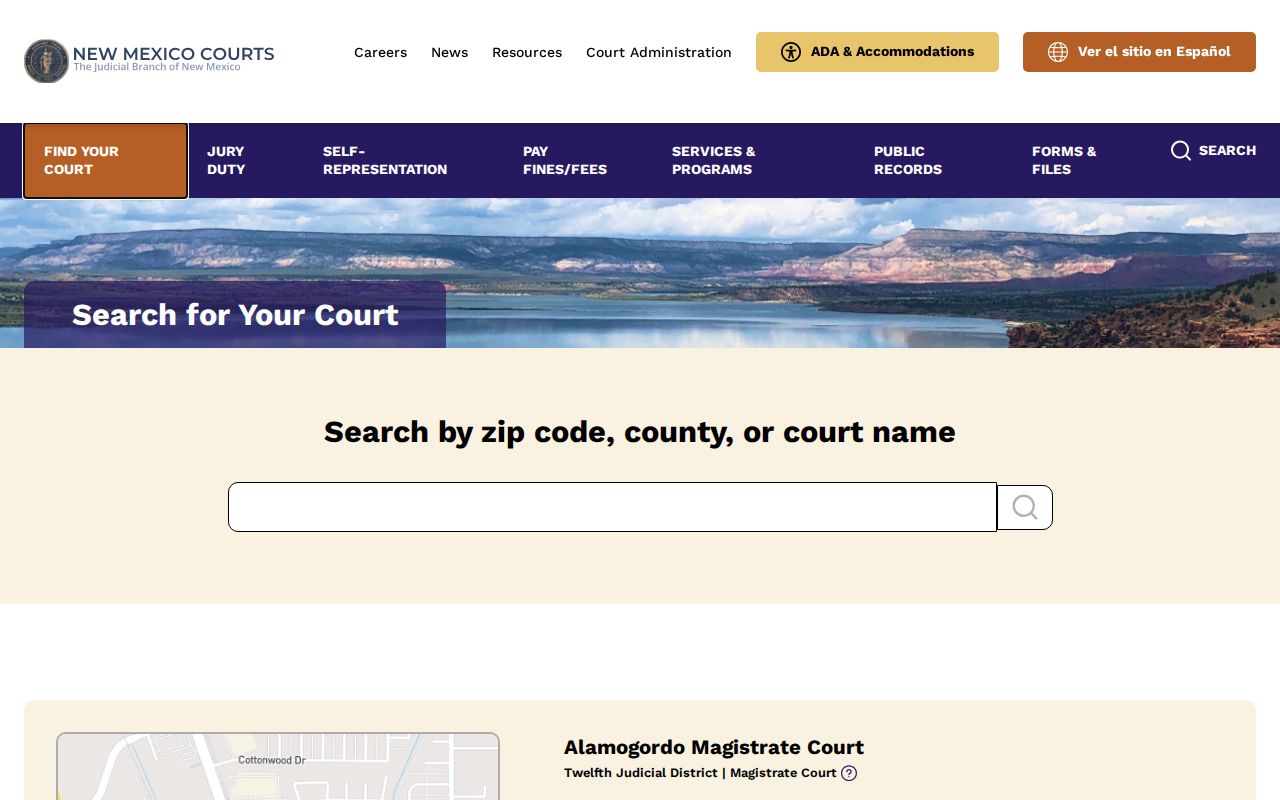
The directory is the key fallback when a New Mexico online search lacks a document, court level, or older case.
New Mexico Criminal Record Fees
Free portals answer only some questions. Pay for the product actually needed. The $15 DPS record is the subject's fingerprint-linked New Mexico history. The FBI's $18 Identity History Summary covers fingerprint submissions received nationally. Court copy and certification fees apply to the original case file, and New Mexico DPS charges for physical IPRA production while electronic GovQA delivery is free.
| Official Product | Fee | Main Limit |
|---|---|---|
| New Mexico DPS state record | $15 | Original notarized authorization; 7 to 15 working days |
| Police Certificate of Good Standing | $33 | Mail-only DPS product |
| DPS manual fingerprint cards | $9 first two | Capture only, not a completed check |
| FBI Identity History Summary | $18 | Subject-only; capture or channeler fee may be extra |
| Case Lookup | Free | Metadata without documents |
| DPS electronic IPRA production | Free | DPS-held releasable records only |
The FBI electronic Identity History Summary portal is the federal subject-record source shown in the next image.
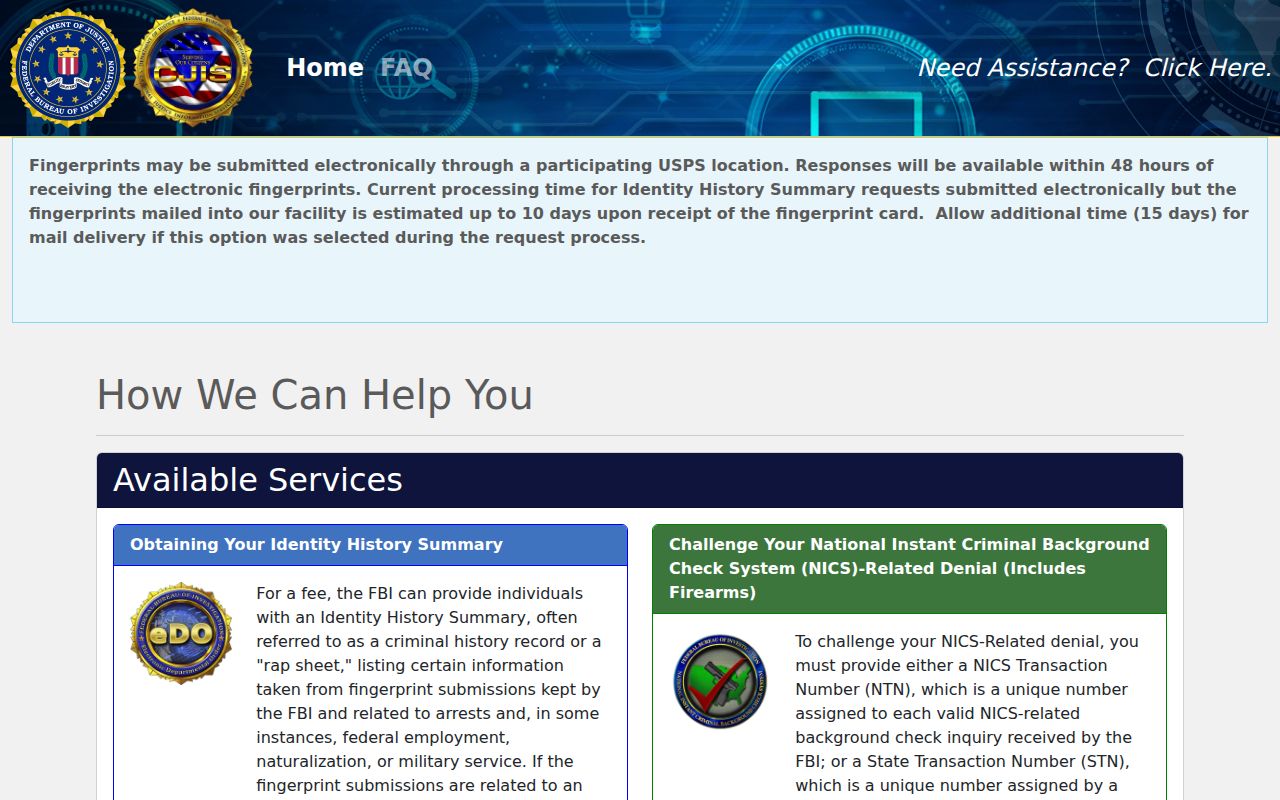
The federal summary can supplement a New Mexico self-review, but it is not a certified copy of any state court case.
What New Mexico Expungement Removes
New Mexico expungement removes covered notations of arrest, complaint, indictment, plea, conviction, acquittal, dismissal, or discharge from general-public access. It is more precise than saying every copy is destroyed. Confidential criminal-justice access can remain where the Criminal Record Expungement Act allows. Juvenile records and protection-order cases follow separate confidentiality and access rules.
A petition begins with your DPS record and every related court case. Use the current statewide judiciary form, then file in district court in the county where the arrest or qualifying case began. List each agency and repository named by the form, serve required parties, and keep a certified order. After entry, recheck Case Lookup and request a new DPS record. Send the order to any named public agency that still displays the event.
New Mexico Probation and Parole Records
Felony probation and parole are state-run through the NMCD Probation and Parole Division. Its FY2024 report described five administrative regions, 46 district offices, and more than 13,000 supervised people. NMCD Offender Search can show an active, inactive, or absconder indicator, but detailed officer notes and sensitive case material may remain confidential.
The court docket records the sentence, motions, and revocation orders. NMCD reports the state supervision status and routes a person to the assigned field office. The New Mexico Parole Board makes parole decisions through statutory panels, while NMCD administers community supervision. A profile that appears inactive does not by itself prove early termination or full sentence discharge.
The official VINELink custody notification service provides a participating notification layer illustrated here.
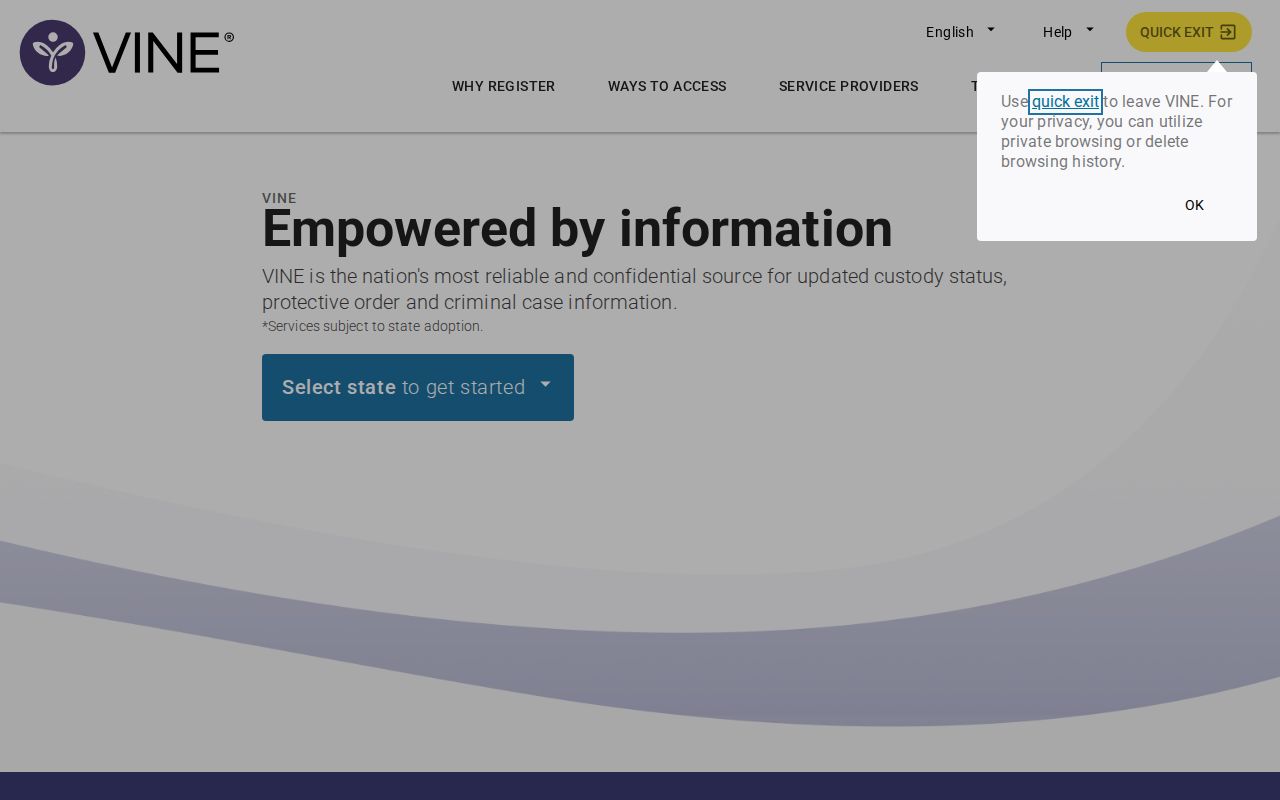
Notification enrollment can help track covered events, but the originating New Mexico facility remains the source for custody status.
Find Criminal Records by County in New Mexico
Arrests, bookings, police reports, and original case files begin locally. New Mexico's largest counties also illustrate different court and custody paths. Metropolitan Court is unique to Bernalillo County. Border, tribal, municipal, state, and federal jurisdiction can overlap elsewhere. Choose the county where the event occurred, then identify the agency, detention center, and court that created each part of the record.
Bernalillo County
Albuquerque · Metropolitan Court and the state's largest county custody system
Doña Ana County
Las Cruces · Southern border-region district and detention records
Santa Fe County
Santa Fe · First Judicial District and state-agency headquarters
Sandoval County
Bernalillo · Rio Rancho-area district, municipal, and detention channels
San Juan County
Aztec · Four Corners county, tribal, state, and federal layers
Valencia County
Los Lunas · Thirteenth Judicial District and county detention records
McKinley County
Gallup · County, municipal, tribal, and federal jurisdiction
Lea County
Lovington · Fifth Judicial District and local/state custody paths
Browse the full directory of all 33 New Mexico counties to open the criminal records site for any county.