
Arrest History in New Mexico
A New Mexico arrest can begin with a county sheriff, municipal police officer, New Mexico State Police officer, campus officer, or an officer acting under tribal or federal authority. The arresting agency creates its incident or arrest report. If booking occurs, the local detention facility creates a separate intake record. A prosecutor and court create another file only if charges are filed. Qualifying fingerprints can create a fourth record at the New Mexico DPS State Central Repository.
These arrest records are linked, but none replaces the others. The police narrative describes the event. The booking entry reports intake charges, custody, bond, and release. The court docket tracks filed counts and outcomes. The New Mexico DPS rap sheet links qualifying fingerprints to arrest cycles and outcomes that contributing agencies report. A recent booking may appear before the court files a case. A court disposition can appear before DPS receives it. Start with the source that answers the actual question.
Four New Mexico Arrest Records
One New Mexico arrest can leave four different trails. The arresting agency holds the report number, alleged conduct, officer information, and public portions of the narrative. The detention center holds the booking number, intake charge, custody status, bond or hold, and release event. New Mexico courts hold the filed complaint, information or indictment, docket, disposition, and judgment. New Mexico DPS holds the fingerprint-linked arrest cycle if the event met reporting rules and was submitted.
| Record | Custodian | Best use | Main gap |
|---|---|---|---|
| Arrest report | Arresting agency | Incident facts and officer narrative | Does not prove the filed charge or outcome |
| Booking entry | County or city detention | Recent custody, bond, and release | Preliminary charges can change |
| Court case | New Mexico Judiciary clerk | Filed counts and final disposition | Not a biometric statewide history |
| DPS rap sheet | New Mexico DPS LERB | Fingerprint-linked state arrest cycles | Depends on qualifying prints and reports |
Note: A same-name court match is not the same as a fingerprint-supported New Mexico DPS identity match.
How Arrests Become Part of a New Mexico Record
For a reportable New Mexico arrest, the agency takes fingerprints and connects the booking sheet to a state tracking number. Section 29-3-8 requires that chain for felony arrests and other covered events. The fingerprint card is the source document sent to the State Central Repository. Courts and criminal justice agencies should later send the count-level outcome so LERB can link the arrest cycle to its disposition.
Data flow: Arrest › Booking › Fingerprint Submission › New Mexico DPS Repository Entry
An arrest may be missing from the New Mexico DPS record because the event did not meet the reporting threshold, fingerprints were not submitted, a citation replaced booking, an agency was late, or an error occurred. A disposition may also be missing even when the arrest is present. Repository accuracy depends on contributing agencies. Compare the DPS cycle with the court's certified outcome when reviewing one's own New Mexico arrest history.
The New Mexico DPS public information gateway shows the agency channel for public records and policy materials.
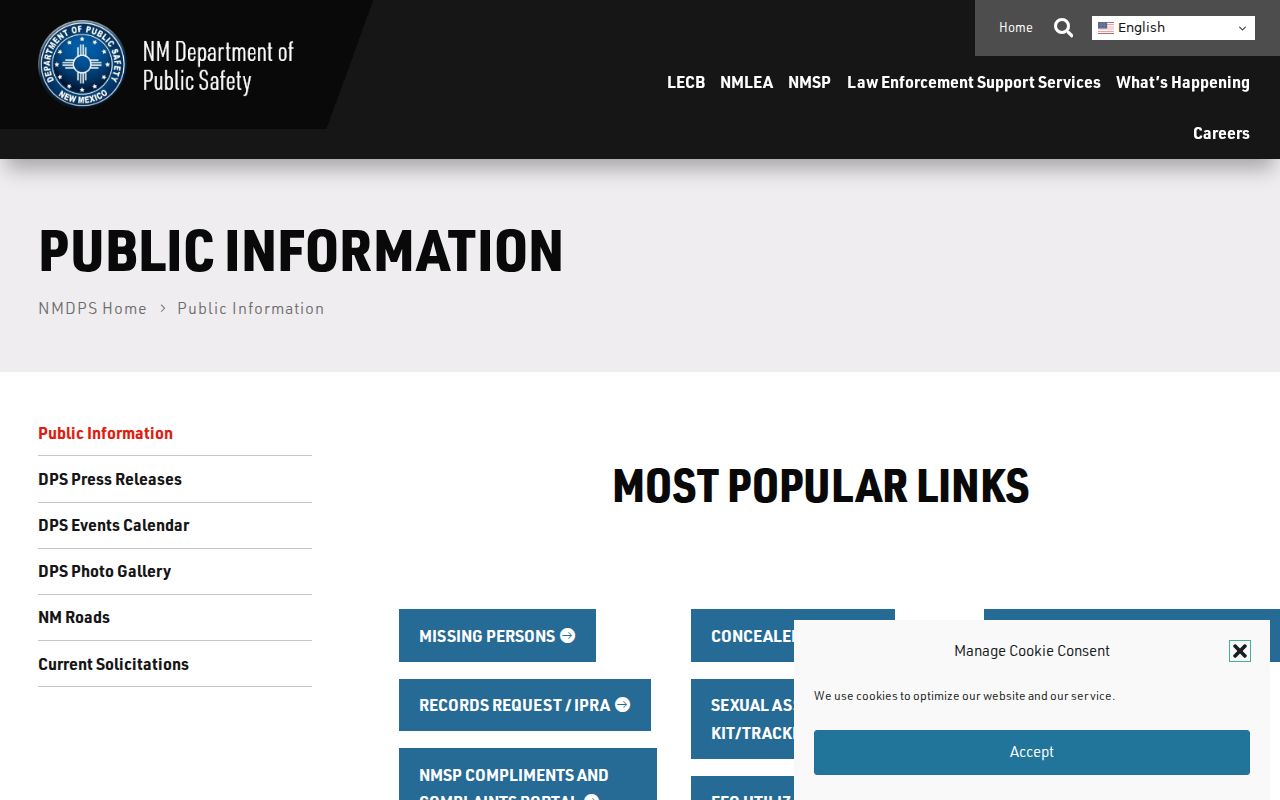
That channel is for DPS-held records. It is not a statewide pool of every local police narrative or jail booking.
New Mexico Arrest Numbers in Context
New Mexico DPS LERB is the state's Uniform Crime Reporting program. It compiles participating city, county, state, and tribal reports under FBI definitions. The FBI Crime Data Explorer reported 55,898 New Mexico arrests for 2024, compared with 52,293 for 2023. The 2024 total included 39,866 male and 16,032 female arrest events. Leading reported categories included 16,729 all-other-offense arrests, 11,472 simple assault arrests, 6,047 DUI arrests, and 4,895 drug or narcotic arrests.
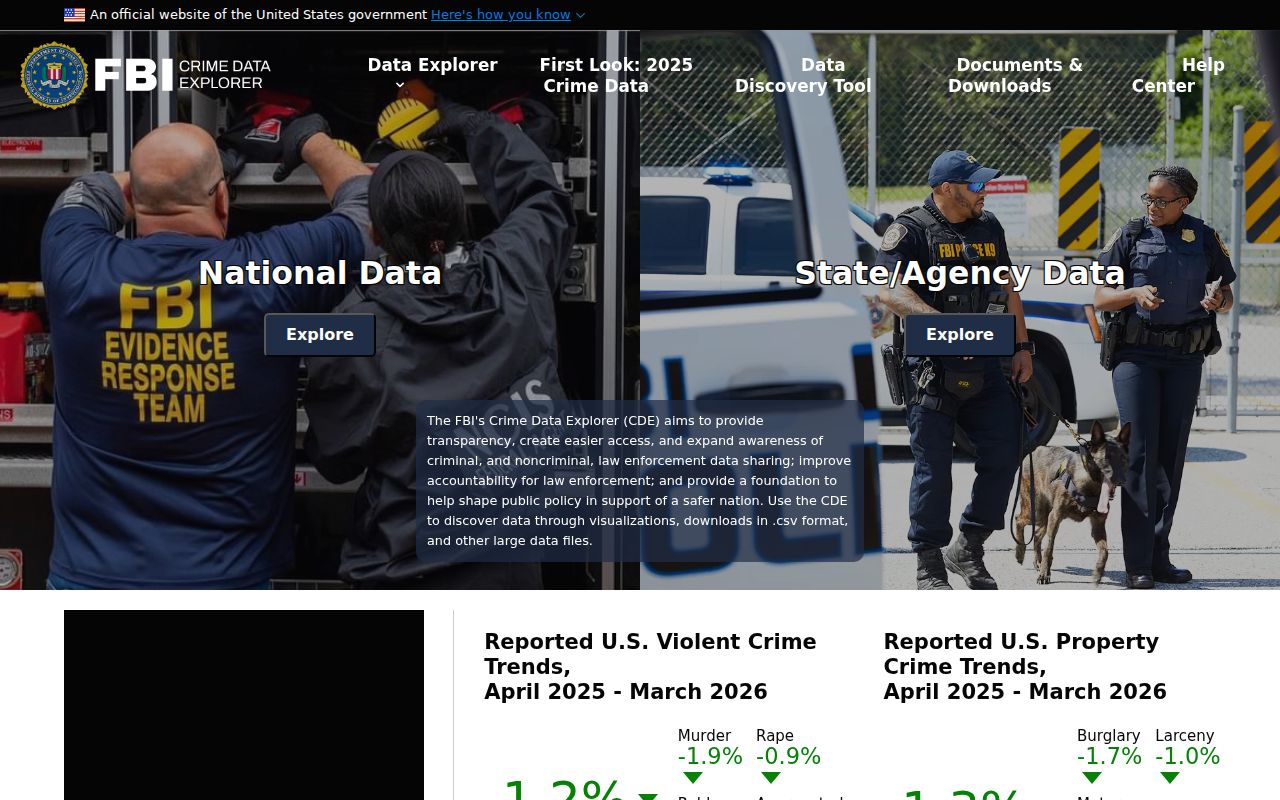
The dashboard places New Mexico arrest counts beside coverage information, which is vital because the figures are not a list of unique people or convictions.
How to Look Up New Mexico Arrests
New Mexico has no open, unrestricted LERB name-search portal. Public lookup starts at the county layer for a recent arrest and at the court for filed charges. A person reviewing their own fingerprint-linked history can use the New Mexico DPS authorization process. The current process requires an original, complete, notarized Authorization for Release of Information and a $15 cashier's check or money order. DPS says the result includes adult, fingerprint-supported New Mexico arrest records received by its repository and generally takes 7 to 15 working days.
- Identify the county, approximate date or location, and likely arresting agency.
- Use the county jail roster or booking desk for the booking number, custody, charges, bond or hold, and release or transfer.
- Request the arrest report from the officer's agency under the New Mexico Inspection of Public Records Act.
- Search New Mexico criminal court cases after filing time and read each count through its outcome.
- For self-review, order the authorized New Mexico DPS record and compare it with certified court dispositions.
- If no entry appears, check aliases, filing delay, another court, citation without booking, restriction, and source records.
Browse the directory of all 33 New Mexico counties to reach the proper local records route. A representative official county detention page shows how a local jail publishes its own access points.
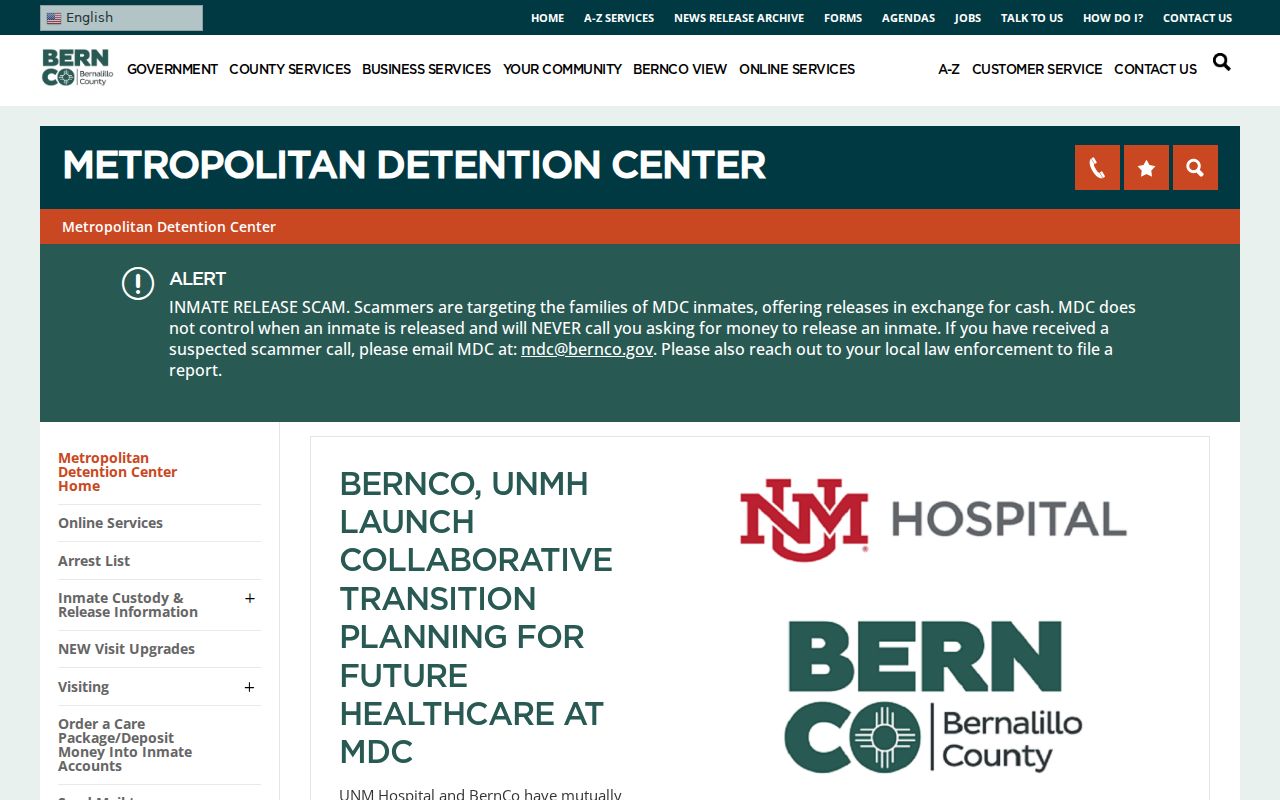
This local example does not create statewide coverage. Each New Mexico county controls or contracts for detention separately.
Who Holds New Mexico Arrest Reports
Ask the agency whose officer made the arrest. A sheriff handles its own patrol and investigation reports, while detention may be run by a separate county entity. A city police department holds its reports. New Mexico State Police reports route through DPS GovQA or its IPRA records channel. Campus police records stay with the institution's police or public-record custodian. Tribal and federal agencies are separate sovereign or federal channels and should not be assumed to report through a county portal.
An IPRA request should describe an existing New Mexico arrest record with reasonable detail. Include the report or booking number if known, agency, date range, location, and the parts sought. IPRA does not require the agency to write a new background summary. Active investigative facts, protected victim information, juvenile material, medical data, confidential sources, and sensitive methods may be withheld or redacted. The custodian should still release separable public portions when the law permits.
Booking photographs are part of the statutory definition of an arrest record, but New Mexico has no rule that forces every jail to post every photo online. Do not treat a mugshot as proof of guilt. Local policy, active cases, safety, juvenile status, and expungement can restrict access.
What an Arrest Record Shows
A public New Mexico arrest or booking entry may show identity details, event time and place, the arresting agency, initial charges, a booking number, state tracking number, bond or holds, the scheduled court, custody, and release. Sensitive intake fields are different. Health screening, exact housing, security classification, Social Security numbers, driver license numbers, protected witnesses, and juvenile or sealed information should not be expected in public display.
| Name & Identifiers | Legal name, aliases, age or birth date, and limited physical descriptors used to distinguish records. |
|---|---|
| Arrest Date & Location | When and where the custody event occurred, subject to public-record limits. |
| Arresting Agency | The sheriff, police, New Mexico State Police, campus, tribal, or federal agency responsible. |
| Charges at Booking | Initial labels and statutes, which prosecutors may amend, replace, or decline. |
| Booking Number & Photo | The detention identifier and an intake image when law and local policy allow release. |
| Bond / Release Status | Current bond, hold, transfer, or release facts at the time of the entry. |
A representative official county custody list illustrates local booking fields.
Its fields and update practices apply only to that local system, so other New Mexico counties may use a portal, phone line, or records request instead.
New Mexico Arrest and Custody Records
A county or city detention center holds people arrested before trial and many serving local or short sentences. The New Mexico Corrections Department holds state prisoners after commitment and supervises covered felony probation and parole. NMCD states that it has no jurisdiction over city or county detention. Its Offender Search is therefore not a recent statewide arrest lookup. Federal custody is a third layer and routes to federal agencies or the Bureau of Prisons.
NMCD's FY2024 report described a calendar-year average daily prison population of 5,285 and more than 13,000 people under Probation and Parole supervision. The figures describe state custody and supervision, not New Mexico county bookings. The NMCD reports library provides dated population and system reports.
Checking the report date prevents an old prison count from being mistaken for current New Mexico arrest activity.
Note: Use a local jail for a recent booking, NMCD for state custody or supervision, and federal sources for federal confinement.
Expunging New Mexico Arrest Records
New Mexico's Criminal Record Expungement Act can remove covered arrest, complaint, conviction, and online notations from general-public access. It does not promise physical destruction of every confidential criminal justice copy. A dismissed adult arrest does not vanish from each public or source system on its own. The person must identify the relevant arresting agency, jail, court, and repository in the proper process.
The first step is to obtain the New Mexico DPS record and certified court outcomes. Then choose the correct form from the Judiciary expungement forms library. The petition goes to District Court in the county where the arrest or qualifying case began, even if the charge was heard in Magistrate, Metropolitan, or Municipal Court. Required parties can include the district attorney, DPS, arresting agency, and other repositories. Release-without-conviction petitions commonly become available one year after final disposition. Conviction routes have longer waiting periods and exclusions, so current law and the judgment must be checked.
After an order, recheck New Mexico Case Lookup and request a fresh DPS record. Send a certified order to any public agency that still displays the covered event.
Arrests vs Convictions
An arrest records an accusation and custody event. A conviction is a court judgment of guilt after an accepted plea or verdict. New Mexico booking charges may change when a prosecutor screens the facts. One count may be dismissed while another ends in conviction. Read each court count and its disposition. A New Mexico DPS arrest cycle without an outcome may reflect a reporting gap rather than a pending case.
| Arrest Record | Conviction Record | |
|---|---|---|
| Created by | Arresting agency and local detention facility | New Mexico court judgment, later reported to DPS |
| What it proves | An arrest or booking was recorded | Guilt was established for a specific count |
| Public access | Agency, jail, court, or authorized DPS route, with restrictions | Public court docket and clerk file unless sealed or restricted |
| Can it clear | Qualifying events may be expunged by the statutory process | Relief depends on offense, completion, waiting period, and exclusions |
Note: A New Mexico arrest entry with no disposition is not proof of guilt; verify the filed case and final court order.